Foaming cleansers can make your face feel especially clean, but that tight, squeaky feeling can mean the cleanser is too strong for your skin.
That does not mean every foaming cleanser causes breakouts. Foam itself is not usually the problem. What matters is the formula and how your face feels after you rinse.
A cleanser can produce very little foam and still remove excess oil, sunscreen, makeup, and daily buildup.
Why More Foam Does Not Mean Cleaner Skin
The amount of lather a cleanser produces depends on the cleansing ingredients in the formula. Some create large bubbles, while others create very little visible foam.
Both can clean the skin.
A thick lather may seem more effective because it spreads quickly and rinses easily, but it does not prove that the cleanser is reaching deeper into your pores or removing more buildup.
The job of a cleanser is to loosen what is sitting on the surface of your face so it can be rinsed away. It should not leave your skin stiff or sore afterward.
How a Strong Cleanser Can Affect Acne-Prone Skin
A cleanser does not have to clog your pores to make your skin look worse.
If your face wash repeatedly leaves your skin dry or irritated, existing blemishes may look redder or feel more tender. You may also notice flaking around your nose, mouth, or chin.
The rest of your routine may begin to feel different too. Moisturizer may sting, and a treatment you previously used without a problem may suddenly feel too strong.
Repeated irritation can also weaken the skin barrier, making products that once felt comfortable begin to sting.
The formula, pH, and how often you wash can all affect how your skin responds.
A face wash is rinsed away quickly, but you use it every day. That dryness and irritation can build.
Signs Your Cleanser May Be Too Strong
Your cleanser may be too strong if you regularly notice:
- Tightness as soon as you rinse
- A stiff or squeaky feeling
- Flaking around your nose, mouth, or chin
- Redness that looks worse after washing
- Moisturizer suddenly stinging
- Small bumps that feel itchy or sore
You do not have to wait until your face becomes very dry before reconsidering your cleanser. Pay attention to how your skin feels during the first few minutes after rinsing.
Are All Foaming Cleansers Bad?
No.
Some foaming cleansers are made with milder cleansing ingredients and work well for acne-prone skin. A light lather may suit you if you prefer a gel texture or have more surface oil to remove.
There is no reason to stop using a cleanser simply because it creates bubbles.
Keep using it if your face feels fine afterward and you are not noticing new dryness, stinging, or irritation.
The problem is believing that tightness is necessary for oily or acne-prone skin.
Tightness is not proof that your face is cleaner.
What to Use Instead of a Strong Foaming Cleanser
A replacement should remove sunscreen, makeup, excess oil, and daily buildup without leaving a greasy coating or making your face feel stripped.
A Cream Cleanser
A cream cleanser has a soft, lotion-like texture and usually produces little or no foam.
It can be a good choice when your face feels oily in some areas but dry or tight in others. It may also feel better when acne treatments have left your skin drier than usual.
A well-made cream cleanser should rinse away cleanly without leaving a heavy film.
A Cleansing Milk
A cleansing milk is usually thinner than a cream cleanser and spreads easily across the face.
It may be a good option when you want a lightweight cleanser without a strong lather.
Some cleansing milks are rinsed with water, while others are removed with a damp cloth. Follow the directions for the product you are using.
A Mild Low-Foam Gel Cleanser
You can still use a gel cleanser if you enjoy that texture.
Look for one that creates a light lather and removes daily buildup without leaving your face tight. A large amount of foam is not necessary for a gel cleanser to work well.
How to Judge a New Cleanser
You can usually tell soon after rinsing whether a cleanser is a good fit.
Wait a moment before applying anything else, then ask yourself:
- Does my face feel tight?
- Are dry areas more noticeable?
- Does my moisturizer sting?
- Did the cleanser remove my sunscreen and makeup?
- Does my skin feel clean without feeling stripped?
A cleanser labeled for oily or acne-prone skin can still be too strong for you. A cream cleanser can also be too rich if it leaves a heavy film.
Judge it by what it does, not by the label or texture.
Your Cleansing Method Matters Too
Even a mild cleanser can leave your face irritated when it is used with very hot water, a rough cloth, or repeated washing.
Use lukewarm water and massage the cleanser with your fingertips. Rinse thoroughly and pat your face dry.
If one cleanse removes what you wore during the day, you do not need to wash again simply because double cleansing is popular.
Why I Chose a Cream Cleanser for Botanically Clear
I created the Botanically Clear Cream Cleanser for women who want their skin to feel clean without the tightness that can follow a strong foaming wash.
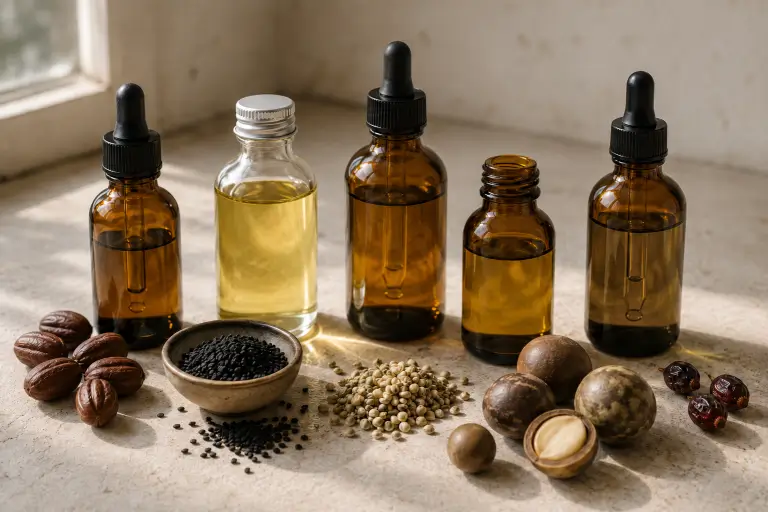
It has a soft, creamy texture and contains jojoba oil, hemp seed oil, squalane, and isoamyl laurate. These ingredients help loosen oil-based buildup so the cleanser can rinse away without leaving a greasy film.
Foam Is Not the Real Test
Foam alone is not the problem. The real test is what happens after you rinse.
If your face regularly feels tight, dry, or irritated, a cream cleanser, cleansing milk, or mild low-foam gel may be a better choice.