Jojoba is commonly called an oil, but it is technically a liquid wax.
That difference is part of what makes it useful in skincare. Most plant oils are made mainly of triglycerides. Jojoba is made mostly of wax esters, which gives it a smooth feel and helps it remain stable longer than many traditional oils.
You may have heard that jojoba is identical to the oil your skin produces. That is not completely accurate. Human sebum does contain wax esters, but it also contains several other types of lipids.
Jojoba shares some similarities with part of your natural skin oil, but it is not the same thing. Its real value comes from the way it softens the skin, improves the feel of a formula, and helps reduce the dry feeling that can follow moisture loss.
What Is Jojoba Oil?
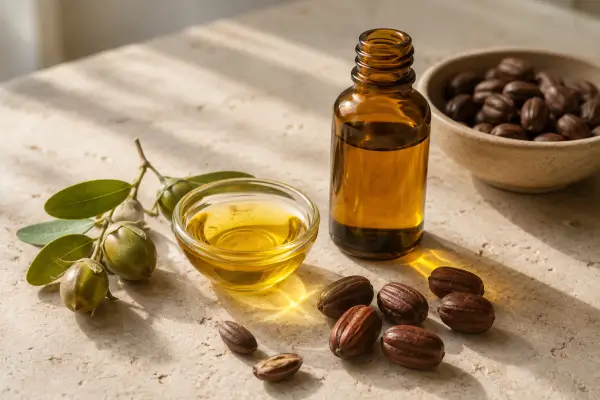
Jojoba oil comes from the seeds of the jojoba plant, which grows naturally in dry regions of North America.
When the seeds are pressed, they release a golden liquid that is used much like a facial oil. Because it stays liquid at room temperature, it is commonly sold and labeled as jojoba oil even though it is technically a wax.
Jojoba spreads easily and leaves a smooth finish on the skin. It is also more resistant to becoming rancid than many oils that contain higher amounts of delicate polyunsaturated fatty acids.
It should still be stored in a tightly closed container away from excessive heat and direct sunlight.
Why Jojoba Feels Different From Other Plant Oils
Plant oils do not all feel or perform the same way.
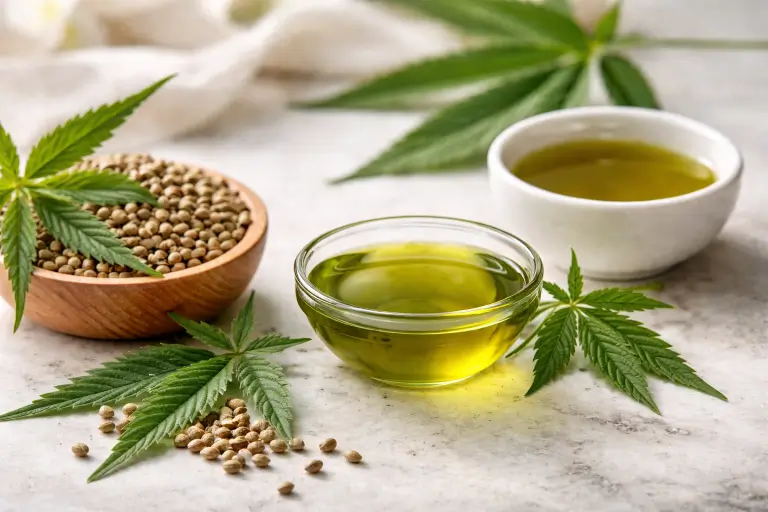
Grapeseed and hemp seed oils are lightweight and rich in fatty acids. Tamanu oil is thicker and has a richer feel. Jojoba falls somewhere in between.
It has enough slip to soften rough areas and help a product spread easily, but it does not usually feel as heavy as a richer oil.
This makes jojoba useful in cleansers, face creams, and targeted oil blends. Its value comes from the way its wax esters behave on the surface of the skin, not from the idea that your skin mistakes it for sebum.
Can Jojoba Help Oily Skin?
When I used jojoba on its own as my main facial moisturizer, it helped reduce the oily look of my skin. My face no longer appeared as shiny as it had before.
However, after using it that way consistently, my skin gradually became drier.
That experience taught me that jojoba could be useful for my oily skin, but it was not enough by itself. My skin still needed the water and other ingredients provided by a complete moisturizer.
This is why I now prefer jojoba as part of a finished formula rather than relying on it alone as my facial moisturizer.
What Does Jojoba Do for the Skin?
It Softens Rough Areas
Jojoba works as an emollient, which means it helps smooth and soften the surface of the skin.
It can help rough or flaky skin feel smoother by softening the dry cells on the surface. A small amount is usually enough.
It Helps Slow Moisture Loss
Jojoba leaves a light layer on the skin that can slow some of the water evaporating from the surface.
It does not add water to the skin. Pure jojoba contains no water or water-binding ingredients, which is why it may not be enough when used as the only moisturizer.
It works best when the skin already has moisture to hold on to.
It Improves the Feel of a Formula
Some ingredients are valuable because they improve the way the entire product performs.
Jojoba adds slip, helping cleansers and creams move across the skin more easily. In an oil blend, it helps richer oils spread evenly so less product is needed.
It can make a formula feel smoother without making it overly heavy.
It Has Good Stability
Jojoba is more resistant to oxidation than many traditional plant oils.
That makes it useful in formulas where stability matters, especially when the product also needs a smooth, lightweight feel.
Good stability does not mean jojoba lasts forever. Proper storage still matters.
The Best Ways to Use Jojoba
Apply It Over a Water-Based Product
When using pure jojoba on the face, apply a water-based essence, serum, lotion, or cream first.
Then press one or two drops of jojoba over the skin if you need more softness.
The water-based product provides hydration. The jojoba helps soften the surface and slow moisture loss.
Using more oil does not necessarily provide more benefit. Too much may leave the skin feeling slick or coated.
Use It in a Face Cream
Jojoba works well in a cream because it can be combined with water-based ingredients.
The water phase provides hydration, while the jojoba softens the skin and improves the way the cream spreads.
For many people, this is more useful than relying on jojoba alone.
Use It in a Cleansing Formula
Jojoba can help loosen sunscreen, makeup, excess oil, and other oil-based buildup.
Pure jojoba does not mix with water, so it may leave a film when used by itself.
In a properly made cream, balm, or oil cleanser, jojoba is combined with ingredients that allow the product to mix with water and rinse away more completely.
Use It in a Targeted Oil Blend
Jojoba works well as part of an oil treatment because it helps the blend spread evenly.
Its role may not be to address the main concern by itself. It may simply help the other oils apply smoothly without making the blend feel too rich.
Will Jojoba Clog Pores?
Jojoba is often described as noncomedogenic, but no single ingredient can be guaranteed to work for everyone.
The amount used, the other ingredients in the product, and whether the product is rinsed off or left on all matter.
A small amount of jojoba in a face cream is not the same as applying a full dropper of pure oil. A cleanser containing jojoba also behaves differently because it is removed during rinsing.
Pay attention to how your skin responds to the complete product rather than relying only on a pore-clogging rating.
Why I Use Jojoba in Botanically Clear Products
I use jojoba in several Botanically Clear formulas, but it serves a different purpose in each one.
In the Cream Cleanser, it helps loosen oil-based buildup and gives the cleanser a smooth glide.
In the Vitamin C Cream, it helps soften the skin and contributes to the lightweight finish.
In the Target Spot Treatment, it helps the oil blend spread evenly so only a small amount is needed.
I use jojoba because it is stable, versatile, and works well with the other ingredients in each formula. It is not expected to do everything on its own.
What Makes Jojoba Worth Using?
Jojoba stands apart from many plant oils because it is a liquid wax made mainly of wax esters.
That structure gives it good stability, a smooth feel, and enough slip to improve the way skincare products apply.
It can soften rough areas, slow moisture loss, and improve the texture of cleansers, creams, and oil blends.
Pure jojoba can be useful in small amounts, but it often works best as part of a complete formula that also provides water-based hydration.
That is where jojoba has been most useful for me: not as my only moisturizer, but as one ingredient chosen for a clear purpose.