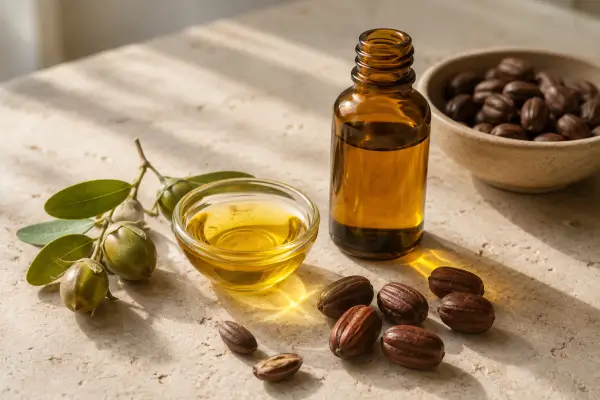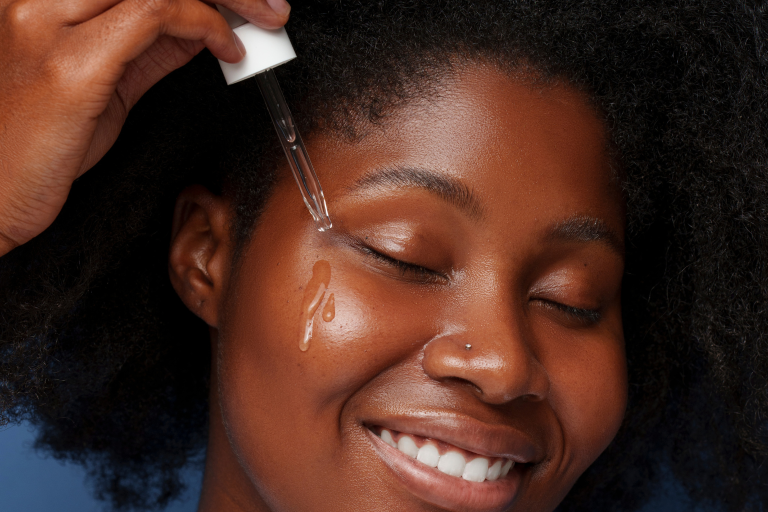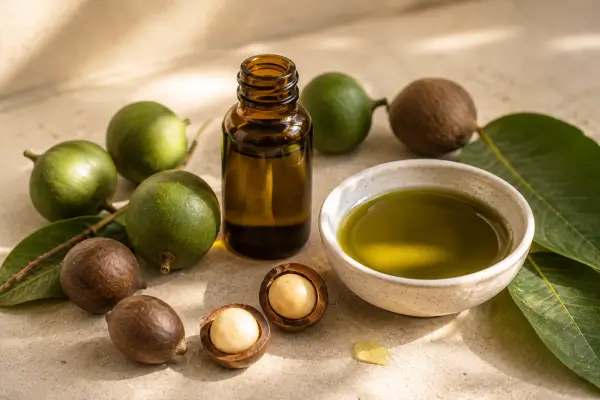
Tamanu oil stands out from many of the lighter oils used for acne-prone skin. It has a rich texture, a deep green or brown color, and a strong earthy scent.
It is often recommended for breakouts, dark marks, and acne scars, but some of those claims go beyond what the oil has been proven to do.
Tamanu oil can still be useful when you understand what it adds to a formula and why it often works better in a blend.
What Is Tamanu Oil?
Tamanu oil is pressed from the seeds of the Calophyllum inophyllum tree, which grows in tropical parts of Asia and the Pacific.
It feels much richer than oils such as grapeseed or jojoba.
Along with fatty acids that soften the skin, tamanu oil contains plant compounds that have made it a popular ingredient for dry, rough, and irritated areas.
What Makes Tamanu Oil Different?
Many plant oils are used mainly for the fatty acids they provide. Tamanu oil also contains distinctive plant compounds that are not found in lighter oils such as grapeseed or jojoba.
This does not make it a proven treatment for acne or scars. Its richer texture gives it a different place in a formula. I find it better suited to small, dry, or uncomfortable areas than as a lightweight oil for the entire face.
How Tamanu Oil Can Be Used on Acne-Prone Skin
Tamanu oil is most useful when the skin around a blemish feels dry or flaky, especially after repeated use of drying treatments.
Because the oil is rich, a small amount is usually enough. Applying it heavily across the entire face may feel uncomfortable on skin that already produces plenty of oil.
Can Tamanu Oil Fade Post-Acne Marks or Scars?
A flat post-acne mark is discoloration left after a blemish. A true scar is raised, indented, or otherwise different in texture.
Tamanu oil is often promoted as a natural treatment for both, but there is not enough evidence to say that it fades excess pigment or repairs an acne scar.
It may help keep the area soft and prevent dryness from making the mark look rougher. That is useful, but it is different from fading the color or changing the structure of the skin.
Why I Prefer Tamanu Oil in a Blend
Tamanu oil is thick and strongly scented, so I prefer using it as one part of a blend rather than applying it alone.
Lighter oils help it spread more easily and keep the finished formula from feeling too heavy. Using it in a blend lets me keep the amount small while still getting the softness I want.
How to Use Tamanu Oil
Begin with a very small amount and apply it only where you need it.
You can use a drop on a small area or choose a finished product that combines tamanu oil with lighter oils.
Test it on a small area before using it regularly, and stop if you notice itching, burning, swelling, or a new group of bumps.
Do not apply tamanu oil to a blemish that is bleeding or still open after being squeezed.
Where Tamanu Oil Fits Best
For me, tamanu oil works best in targeted blends rather than as an all-over facial oil. Its thick texture and strong scent are easier to work with when it is balanced with lighter oils.