I started making matcha lattes at home because the ones I bought were often much sweeter than I wanted. They tasted good, but I could tell that much of the flavor was coming from sugar rather than the matcha itself.
Making my own gives me control over how strong, creamy, and sweet it is. It also costs much less than buying one every time I want it.
Matcha does have a strong, earthy taste, especially when you are new to it. The first one you make may not be exactly right, and that is okay. You may need a little less matcha, a different milk, or a small amount of honey to get the flavor where you like it.
Once you figure out what works for you, it is a very easy drink to make.
What Is Matcha?
Matcha is green tea that has been ground into a fine powder. With regular green tea, the leaves are steeped in water and then removed. With matcha, the powder is whisked directly into the water, so it becomes part of the drink.
I look for pure matcha powder rather than a prepared latte mix. Many of those mixes already contain sugar, powdered milk, or added flavoring.
The ingredient list should simply say matcha or matcha green tea powder.
The color can also tell you something about the quality. I look for matcha with a fresh green color rather than one that appears brown or dull. Better matcha usually has a smoother flavor and is less likely to taste overly bitter.
Why Matcha Can Taste Bitter
Matcha is not supposed to taste like a sugary drink, but it should not be so bitter that you have to force yourself to finish it.
Using too much powder is one of the easiest ways to make it taste too strong. One teaspoon is enough for a homemade latte, and you can use slightly less when you are first getting used to the flavor.
Water temperature matters too. I do not pour boiling water directly over the matcha. I heat the water and let it sit for about a minute before using it. The water is still hot enough to mix the powder, but it is less likely to bring out a harsh taste.
When my latte tastes stronger than I want, I reduce the amount of matcha before adding more honey or maple syrup. Adding more and more sweetener may cover the bitterness, but it can also turn a simple drink into something much sweeter than you intended.
How to Keep Matcha From Clumping
Matcha does not dissolve the way instant coffee does. When you add dry matcha directly to a full cup of milk, small clumps usually remain no matter how long you stir it.
I mix the matcha with a small amount of hot water first. This creates a smooth base before the milk is added.
A handheld frother makes this easy, but you do not need one. A small whisk works well, and a fork can work when that is what you have available.
When the powder already has small lumps in it, I sift it into the cup before adding the water. This only takes a few seconds and gives the latte a much smoother texture.
Simple Homemade Matcha Latte Recipe
Ingredients
- 1 teaspoon pure matcha powder
- 2 tablespoons hot water
- ¾ cup unsweetened milk
- ¼ teaspoon pure vanilla extract, optional
- 1 teaspoon honey or maple syrup, optional
Instructions
- Add the matcha powder to a cup or small bowl.
- Pour in the hot water.
- Whisk until the mixture is smooth and no dry clumps remain.
- Warm the milk in a small saucepan or microwave.
- Stir the vanilla and honey or maple syrup into the warm milk.
- Pour the milk into the matcha and stir well.
Taste the latte before adding more sweetener. Sometimes the milk and vanilla soften the matcha enough without needing anything else.
How to Make an Iced Matcha Latte
I prepare the matcha the same way whether I am making it hot or iced.
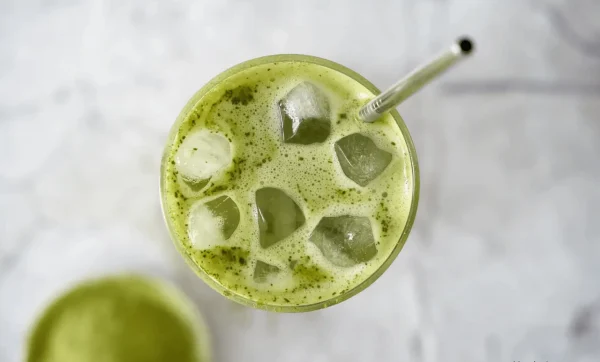
Add the matcha to a cup and whisk it with the hot water until smooth. Fill a glass with ice, pour in the milk, and then add the matcha mixture. Stir in the vanilla and sweetener.
I still use hot water for the first step because matcha does not blend well when it is added directly to cold milk.
Choosing a Milk
You can use whichever milk you already enjoy.
Different types of milk will change the flavor and texture of the latte. Some are thicker and creamier, while others have a lighter consistency. Some plant based milks also have a noticeable flavor of their own.
I prefer unsweetened milk because it allows me to control how much sugar goes into the drink. When sweetened milk, flavored syrup, and a prepared matcha mix are used together, the sugar can add up before you realize it.
I explain more about the sugar that can add up in everyday foods and drinks in Sugar and Acne: How Much Is Too Much?
There is no need to buy a special milk just for this recipe. Use one you already like and adjust the amount of matcha if needed.
When I Drink Matcha
Matcha contains caffeine, so I usually drink it earlier in the day. I may have it in the morning with breakfast or later when I want a warm drink.
I do not drink it close to bedtime because I know caffeine can interfere with my sleep.
I also prefer having it after I have eaten something rather than drinking it on an empty stomach. That is simply what feels best for me.
The Way I Like Mine
I like my matcha latte creamy, warm, and lightly sweetened. I usually add vanilla and about a teaspoon of honey. That softens the earthy taste without covering it completely.
In warmer weather, I use the same ingredients and pour everything over ice.
Making matcha at home gives me the drink I actually want. I can keep the ingredients simple, add only the amount of sweetness I enjoy, and make it in just a few minutes.