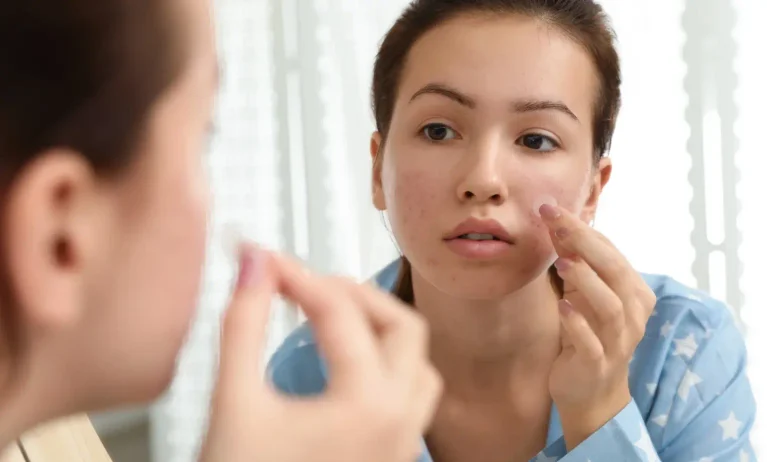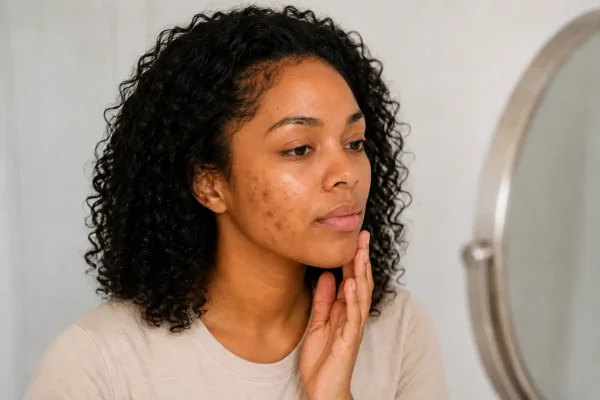
A blemish can heal and still leave a brown, gray, or purple mark behind. On deeper skin tones, that leftover color can sometimes be more noticeable than the blemish was.
These marks are often called acne scars, but discoloration and scarring are not the same.
If the area feels flat and only the color has changed, you are most likely dealing with a post-acne mark. If it is indented or raised, the texture of the skin has changed. Brightening ingredients may improve the color around a scar, but they cannot correct the indentation or raised area.
The ingredients below are meant for flat brown or gray marks caused by excess pigment after a blemish. Red or purple marks may respond differently.
If the blemish is still swollen, tender, or open, read What to Do Instead of Popping a Pimple before treating the mark it may leave behind.
1. Vitamin C
Vitamin C can help reduce the excess pigment that makes a post-acne mark look darker than the surrounding skin. It can also be useful when uneven tone extends beyond one or two individual marks.
Vitamin C comes in different forms, and they do not all behave the same way in a skincare product.
Pure ascorbic acid usually requires an acidic formula. Some women use it comfortably, while others find it too strong for their skin.
Magnesium ascorbyl phosphate is a stable form that can be added to a cream without requiring the same low pH. It may be a better option for women who want vitamin C but do not respond well to highly acidic products.
Use vitamin C after the blemish has closed and the remaining concern is discoloration.
2. Licorice Root
Licorice root contains plant compounds that can help reduce excess pigment.
It can be especially useful for flat brown or gray marks and is often paired with ingredients such as vitamin C or soy extract.
Licorice extract is usually used in leave-on products, while finely milled licorice root may be included in a rinse-off mask. For a leave-on product, look for licorice extract rather than plain licorice powder.
3. Azelaic Acid
Azelaic acid is especially useful when active acne and post-acne marks are present at the same time.
It can help with clogged and inflamed blemishes while also addressing the excess pigment left behind after acne. This makes it a practical choice when you are still experiencing breakouts while trying to improve earlier marks.
Azelaic acid occurs naturally in grains, but the form used in skincare is made so the strength remains consistent.
Some products may cause tingling when first applied. Follow the directions and avoid using more than recommended. Applying a thick layer will not make the mark fade faster.
4. Papaya Enzymes
Papaya contains an enzyme called papain that helps loosen dead cells from the surface of the skin.
Papaya enzymes do not reduce pigment in the same way as vitamin C, licorice root, azelaic acid, or kojic acid. They help remove surface buildup that can make a mark look duller and the surrounding skin feel rough.
As that buildup is removed, the mark may look lighter and the skin around it may feel smoother.
Papaya enzymes make the most sense as an occasional rinse-off step rather than the main ingredient used for discoloration.
Follow the product directions. Leaving an enzyme mask on longer or using it too frequently can irritate the area and make the discoloration worse.
5. Stabilized Soy Extract
Stabilized soy extract can help reduce the transfer of pigment into the skin cells around a mark.
Unlike an exfoliating ingredient, soy extract does not work by removing surface cells or causing peeling.
Soy is a botanical ingredient, but the type used for uneven pigmentation is prepared and stabilized so it can remain effective in a finished formula.
Look for soy extract or stabilized soy extract on the ingredient list.
6. White Mulberry Extract
White mulberry contains plant compounds that can slow the production of melanin.
It is used in products for brown spots and uneven tone and may appeal to women who prefer botanical extracts. However, it has less human research behind it than azelaic acid or stabilized soy extract.
7. Kojic Acid
Kojic acid is produced through fermentation rather than taken directly from a plant.
It is commonly used in products for dark spots and uneven pigmentation because it slows one of the steps the skin uses to make melanin.
Kojic acid may help with darker, flat marks that have been difficult to improve, but it can be more irritating than some of the botanical options on this list.
Redness, stinging, and peeling can occur when the formula is too strong for your skin. For skin that develops dark marks easily, repeated irritation can leave the area looking worse.
Choose a finished product from a trusted company rather than purchasing raw kojic acid powder and trying to make your own treatment. The strength, stability, and rest of the formula all affect how the ingredient performs.
Which Ingredient Makes the Most Sense?
If you are still dealing with active acne along with dark marks, azelaic acid may be the most practical place to begin.
For uneven tone across a larger area, vitamin C or stabilized soy extract may make more sense than treating each mark separately.
For brown or gray marks on skin that does not tolerate stronger products well, licorice root or stabilized soy extract may be worth considering.
Papaya enzymes are most useful when dull surface buildup or rough texture is part of what you see.
Kojic acid may help with darker marks, but stop using it if it repeatedly leaves your skin irritated.
Keep the Mark From Becoming Darker
A post-acne mark can become darker while you are trying to fade it, especially when the area is exposed to the sun or repeatedly irritated.
Use sunscreen on exposed skin, especially when using a product made for uneven tone.
Once a blemish has healed and the area is flat, stop covering it with drying spot treatments. Those products were made for the active blemish, not the color it left behind.
Squeezing, scratching, or repeatedly rubbing the same area can also cause more inflammation and leave additional pigment behind.
Choose One Ingredient Based on What You See
A flat post-acne mark needs different care from an active blemish or a raised or indented scar.
Choose one ingredient that fits the type of mark you have and what else is happening with your skin. Starting with one ingredient also makes it easier to see whether it is actually helping instead of layering several brightening products on the same area.